

Lychee Market to Reach USD 14.17 Billion by 2035 Driven by Global Demand, Innovation, and Expanding Trade Opportunities
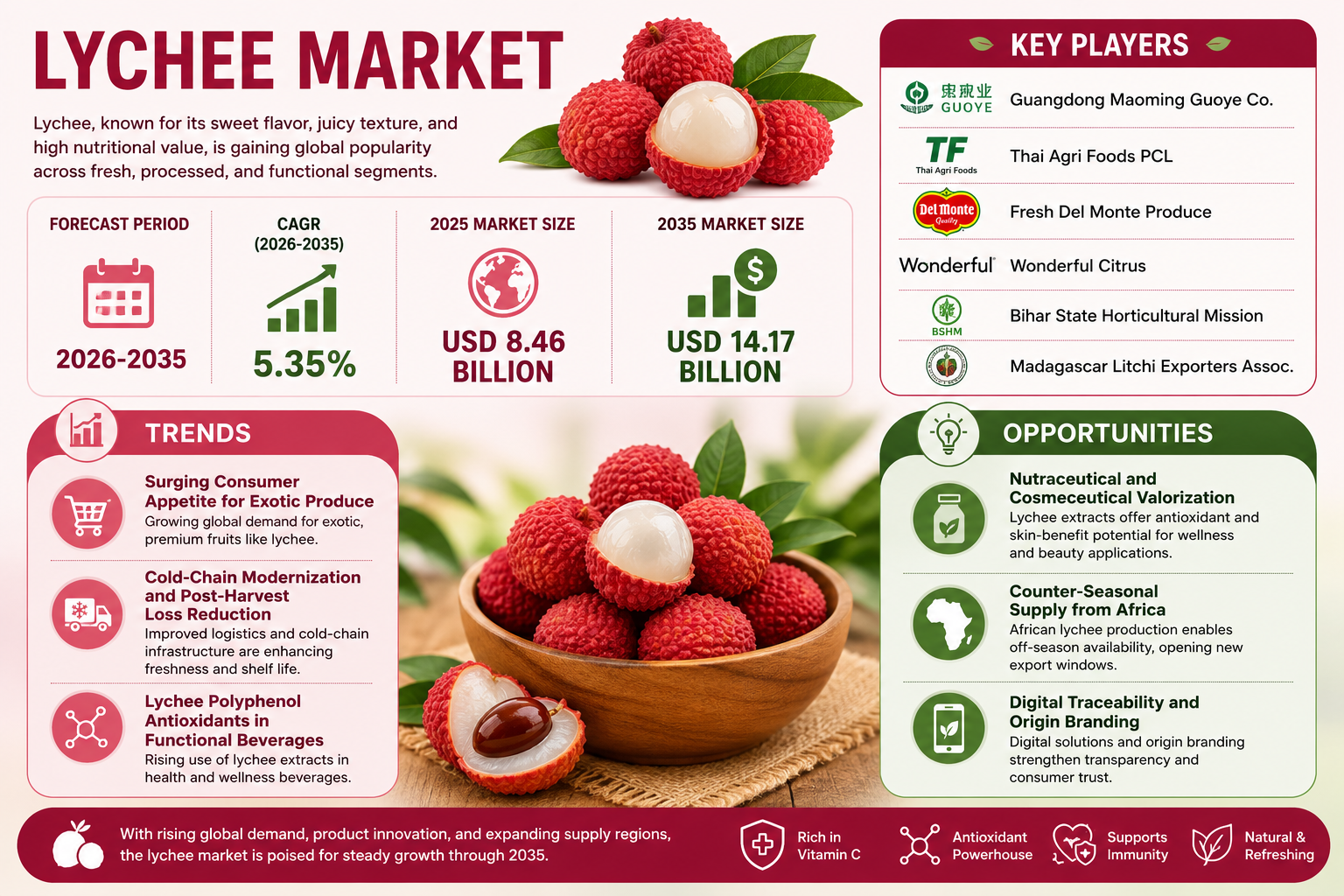
Lychee Market
The global Lychee Market is witnessing steady growth due to increasing consumer demand for exotic fruits, natural food products, and healthier dietary choices.
NEW YORK, NY, UNITED STATES, July 10, 2026 /EINPresswire.com/ -- Market Overview:The global Lychee Market is experiencing steady development as consumer preferences continue moving toward natural, nutritious, and premium fruit products. Lychee, recognized for its unique flavor, appealing aroma, and high consumer acceptance, has become an increasingly popular fruit across domestic and international markets. The rising demand for fresh fruits, along with growing applications of lychee in beverages, desserts, processed foods, and functional food products, is creating new opportunities throughout the global value chain.
According to Market Research Future analysis, the Lychee Market was valued at USD 8.46 Billion in 2025 and is projected to reach USD 14.17 Billion by 2035, expanding at a compound annual growth rate (CAGR) of 5.35% during the forecast period of 2026–2035. This growth reflects increasing consumption patterns, advancements in agricultural practices, improved storage and transportation systems, and the expansion of international fruit trade.
The market scope covers worldwide lychee production, distribution, trade, and consumption across fresh, dried, and processed product categories. Over the past few years, changing dietary habits, increasing awareness about healthy eating, and growing preference for naturally sourced ingredients have encouraged consumers to explore exotic fruits such as lychee. Food manufacturers are also utilizing lychee as a distinctive ingredient to develop innovative products that align with evolving consumer expectations for unique flavors and healthier alternatives.
Market Size and Forecast Analysis:
The Lychee Market is expected to maintain consistent growth momentum throughout the forecast period, supported by rising consumer demand and expanding commercial applications. The market valuation of USD 8.46 Billion in 2025 indicates strong global acceptance of lychee products across both traditional and emerging markets. The increasing availability of fresh and processed lychee products through supermarkets, specialty stores, and online retail platforms is contributing to wider consumer reach.
One of the major factors influencing market expansion is the increasing integration of lychee into international food supply chains. Previously, lychee consumption was largely concentrated in regions with established cultivation practices; however, improved transportation systems and global trade connections have expanded access to new consumer markets. Countries with limited domestic production are increasingly importing lychee to meet growing demand for exotic fruits.
The forecast period is also expected to witness greater investment in processing facilities and preservation technologies. Since fresh lychee has a limited shelf life, companies are focusing on dried, canned, frozen, and processed formats to extend product availability beyond harvesting seasons. These developments are expected to create additional revenue streams and reduce dependency on seasonal consumption.
Growth Factors Driving the Lychee Market:
Increasing Consumer Demand for Natural and Nutrient-Rich Fruits
Growing awareness regarding healthy lifestyles is one of the primary factors contributing to the expansion of the Lychee Market. Consumers worldwide are becoming more conscious of their food choices and are increasingly incorporating fresh fruits into their daily diets. Lychee benefits from this trend due to its naturally sweet taste, refreshing characteristics, and nutritional profile.
The shift toward healthier eating habits has encouraged households, restaurants, and food service providers to include more exotic fruits in their offerings. Consumers are showing greater interest in fruits that provide both sensory appeal and nutritional benefits, allowing lychee to gain popularity beyond traditional consumption regions.
The demand for premium fruits is also increasing as consumers become willing to spend more on high-quality agricultural products. This trend is encouraging producers to focus on improving fruit quality, harvesting methods, packaging standards, and supply chain efficiency to meet evolving expectations.
Expansion of Global Fruit Trade and Distribution Networks:
International trade development is playing a significant role in strengthening the lychee industry. Advances in logistics, refrigeration technology, and transportation infrastructure have improved the movement of fresh fruits across geographical boundaries. These improvements have enabled producers to reach markets where lychee cultivation is limited or unavailable.
Export-oriented agriculture is becoming increasingly important for lychee-producing countries. Farmers and agricultural businesses are focusing on meeting international quality standards to access profitable overseas markets. Government support, agricultural initiatives, and investments in export infrastructure are further contributing to market development.
Retail expansion is another important factor supporting growth. Supermarkets, hypermarkets, specialty food stores, and online grocery platforms are increasing the availability of lychee products, making them more accessible to consumers. This wider distribution network is helping transform lychee from a seasonal specialty fruit into a globally recognized product.
Rising Demand for Processed Lychee Products:
The growing popularity of processed fruit products is creating significant opportunities within the Lychee Market. While fresh lychee remains a major segment, processed formats are gaining attention due to convenience, extended shelf life, and broader application possibilities.
Food and beverage manufacturers are increasingly using lychee as a flavor ingredient in juices, beverages, desserts, confectionery products, dairy items, and snacks. The fruit’s distinctive flavor profile makes it attractive for product innovation, especially in premium and specialty food categories.
Dried lychee products are also gaining popularity among consumers seeking convenient snack options. These products offer longer storage periods and can be marketed throughout the year, reducing the impact of seasonal production cycles. Similarly, canned and frozen lychee products provide manufacturers and retailers with opportunities to maintain consistent supply.
Advancements in Cultivation and Agricultural Technologies:
Technological improvements in agriculture are supporting better productivity and quality management within lychee cultivation. Farmers are adopting improved farming practices, irrigation techniques, crop management systems, and sustainable agricultural approaches to enhance production efficiency.
Climate management, pest control solutions, and improved harvesting methods are helping growers achieve better-quality yields. These advancements are particularly important as demand increases and producers need to maintain consistent supply while addressing environmental challenges.
Sustainable cultivation practices are also becoming increasingly relevant as consumers and businesses place greater importance on environmentally responsible food production. Producers adopting sustainable methods may gain stronger market positioning as demand for responsibly sourced agricultural products continues to grow.
Download Free Sample PDF Copy : – Access A Complimentary Copy of Our Report to Explore Its Content and Insights
https://www.marketresearchfuture.com/sample_request/25137
Market Segmentation Analysis:
The global Lychee Market is segmented across product form, application areas, and distribution channels, highlighting the different ways lychee is cultivated, processed, marketed, and consumed worldwide. These segments reflect changing consumer preferences, expanding food industry applications, and evolving retail patterns that continue to influence market growth.
Based on product form, fresh lychee remains a leading segment due to strong consumer demand for naturally sourced fruits with authentic flavor, freshness, and nutritional appeal. Fresh lychee is widely consumed by households and is also extensively used by restaurants, hotels, catering businesses, and food-service operators. The increasing preference for premium-quality fruits is encouraging producers to improve cultivation methods, harvesting practices, packaging solutions, and cold chain management to maintain product quality during transportation.
The processed lychee segment, including canned lychee, juice, puree, and other value-added products, is witnessing increasing adoption due to growing demand for convenient and long-lasting food options. Processed lychee products allow manufacturers to overcome seasonal availability limitations and provide consumers with year-round access to lychee flavors. These products are gaining popularity in beverages, desserts, confectionery, dairy products, and other food applications, particularly in regions where fresh lychee supply is limited.
The dried lychee segment is also gaining attention as consumers increasingly seek convenient and healthy snack alternatives. Dried lychee offers longer shelf life, easy storage, and portability, making it suitable for direct consumption as well as use in bakery products, desserts, cereals, and specialty foods. The rising popularity of natural snacks and clean-label ingredients is supporting demand for dried lychee products.
By application, the beverage industry represents a significant growth area for lychee utilization. Food and beverage manufacturers are incorporating lychee flavors into fruit juices, ready-to-drink beverages, flavored drinks, and wellness-focused products to meet increasing consumer demand for refreshing and naturally derived beverages. The fruit’s unique taste profile makes it an attractive ingredient for product innovation across the beverage sector.
The food processing industry is another important application segment contributing to market expansion. Lychee is increasingly used in confectionery items, desserts, jams, sauces, and specialty food products. These applications enable manufacturers to diversify their product portfolios while creating additional value from lychee-based ingredients.
Key Market Trends:
The Lychee Market is witnessing several emerging trends that are reshaping production strategies, consumer preferences, and product development approaches across the global fruit industry. As consumers increasingly prioritize health, convenience, and unique food experiences, lychee producers and food manufacturers are exploring new ways to expand product offerings and strengthen market presence.
One of the major trends influencing the market is the growing preference for premium and exotic fruits. Consumers are becoming more interested in discovering new flavors and incorporating specialty fruits into their diets. Lychee’s distinctive taste, attractive appearance, and association with premium fruit categories have increased its popularity among urban consumers, restaurants, and hospitality businesses. This trend is encouraging growers and retailers to focus on quality enhancement, attractive packaging, and improved freshness preservation.
Another important trend is the increasing use of lychee in the beverage industry. Beverage manufacturers are utilizing lychee flavor and extracts in juices, fruit blends, flavored drinks, and wellness beverages. The demand for natural fruit-based beverages is rising as consumers move away from artificial flavors and seek products made with recognizable ingredients. Lychee’s refreshing taste makes it suitable for both traditional and innovative beverage applications.
The expansion of value-added lychee products is also shaping market development. Companies are investing in dried lychee, frozen products, canned varieties, and fruit-based ingredients to overcome seasonal availability challenges. These processed formats allow manufacturers to serve consumers throughout the year while reducing post-harvest losses associated with fresh fruit distribution.
Competitive Landscape:
The global Lychee Market is characterized by the presence of agricultural producers, exporters, food processing companies, and specialty fruit distributors focusing on expanding cultivation capacity, improving supply chain efficiency, and strengthening international market reach. Companies operating in this industry are adopting strategies such as sustainable farming practices, export expansion, advanced packaging solutions, and product diversification to meet increasing global demand for fresh and processed lychee products.
The competitive environment is influenced by factors such as product quality, cultivation expertise, seasonal availability, distribution capabilities, and the ability to provide consistent supply across international markets. Leading participants are focusing on enhancing post-harvest management, improving logistics networks, and developing value-added lychee products to gain a competitive advantage.
Key Companies:
▪️Guangdong Maoming Guoye Co
▪️Thai Agri Foods PCL
▪️Fresh Del Monte Produce
▪️Dole Food Company
▪️Wonderful Citrus
▪️Bihar State Horticultural Mission
▪️Madagascar Litchi Exporters Association
▪️Bac Giang Lychee JSC (Vietnam)
▪️Nature’s Pride (Netherlands)
▪️Dragonberry Produce (US)
Overall, competition in the Lychee Market is expected to intensify as demand for fresh, exotic, and processed fruit products continues to expand globally. Market participants that invest in sustainable cultivation, efficient logistics, innovative product development, and strong international distribution networks are likely to achieve stronger positioning in the evolving global lychee industry.
Market Opportunities:
The Lychee Market offers significant growth opportunities as demand continues expanding across different regions and application areas. The combination of increasing health awareness, rising international trade, and product innovation is creating favorable conditions for producers, exporters, and food processing companies.
One of the strongest opportunities lies in expanding lychee cultivation and distribution networks in emerging economies. Developing regions with suitable climatic conditions are investing in agricultural development and exploring fruit exports as a source of economic growth. Improved farming techniques and better access to international markets can help producers increase their contribution to global supply chains.
The growing demand for functional and natural food products presents another important opportunity. Consumers are increasingly choosing foods and beverages that align with wellness-oriented lifestyles. Lychee-based products can benefit from this trend by being positioned as natural, flavorful, and nutrient-rich options within the health-focused food segment.
Innovation in processed products is expected to create additional opportunities for market participants. Companies can explore new product categories such as lychee-based snacks, ready-to-drink beverages, frozen desserts, fruit concentrates, and specialty ingredients for food manufacturers. These innovations can help extend consumption beyond traditional fresh fruit applications.
Market Challenges:
One of the key challenges is the seasonal nature of lychee production. The fruit is highly dependent on specific climatic conditions and harvesting periods, which can create fluctuations in supply availability. Weather changes, temperature variations, and environmental uncertainties may affect crop yield and quality, creating challenges for producers and distributors.
Post-harvest management remains another important concern within the industry. Fresh lychee has a limited shelf life and requires careful handling during storage and transportation. Without proper cold chain infrastructure, products may experience quality deterioration, reducing profitability for suppliers and limiting market reach.
Transportation and logistics costs can also impact the competitiveness of lychee products, particularly in international markets. Maintaining freshness during long-distance transportation requires advanced storage solutions, which can increase operational expenses.
Additionally, small-scale farmers may face difficulties accessing modern agricultural technologies, financial resources, and international markets. Limited investment capacity can restrict their ability to improve productivity, adopt sustainable practices, and compete effectively in global trade.
Regional Outlook:
The global Lychee Market shows varied growth trends across regions due to differences in cultivation practices, consumer preferences, trade activities, and agricultural conditions. Asia-Pacific holds a prominent position, supported by favorable climates, strong production capabilities, and rising domestic and international demand.
North America and Europe are witnessing increasing adoption of lychee products as consumers explore exotic fruits and premium food varieties. Improved retail availability, import networks, and specialty food channels are helping expand market presence across these regions.
Africa is projected to experience notable growth in the Lychee Market, supported by agricultural investments, suitable farming conditions, and expanding export opportunities. South America and the Middle East & Africa are also emerging markets, driven by growing awareness, better distribution systems, and increasing interest in diverse fruit options.
Frequently Asked Questions (FAQs)
1. What factors are driving the growth of the Lychee Market?
The market growth is supported by rising consumer interest in exotic fruits, increasing demand for natural food products, expanding international trade, and growing applications of lychee in beverages, snacks, and processed foods.
2. What are the major product categories in the Lychee Market?
The market includes fresh lychee, dried lychee, and processed products such as canned lychee, juices, and purees. Each category serves different consumer preferences and food industry applications.
3. Which region is expected to witness strong growth in the Lychee Market?
Regions with expanding cultivation activities, improving agricultural infrastructure, and increasing export opportunities are expected to experience strong market growth, particularly emerging production areas.
Read Our Related Research Report:
Fruit Vegetable Ingredient Market:
https://www.marketresearchfuture.com/reports/fruit-vegetable-ingredient-market-26895
Fresh Fruits Market:
https://www.marketresearchfuture.com/reports/fresh-fruits-market-22406
Fruit Snacks Market:
https://www.marketresearchfuture.com/reports/fruit-snacks-market-26888
Fruits And Vegetables Processing Equipment Market:
https://www.marketresearchfuture.com/reports/fruits-and-vegetables-processing-equipment-market-35133
Frozen Fruit And Vegetable Processing Market:
https://www.marketresearchfuture.com/reports/frozen-fruit-and-vegetable-processing-market-34958
Sagar Kadam
Market Research Future
+1 628-258-0071
email us here
Legal Disclaimer:
EIN Presswire provides this news content "as is" without warranty of any kind. We do not accept any responsibility or liability for the accuracy, content, images, videos, licenses, completeness, legality, or reliability of the information contained in this article. If you have any complaints or copyright issues related to this article, kindly contact the author above.
