

Maximizing RFID Efficiency: Best Practices for Installing RFID Readers in Smart Logistics
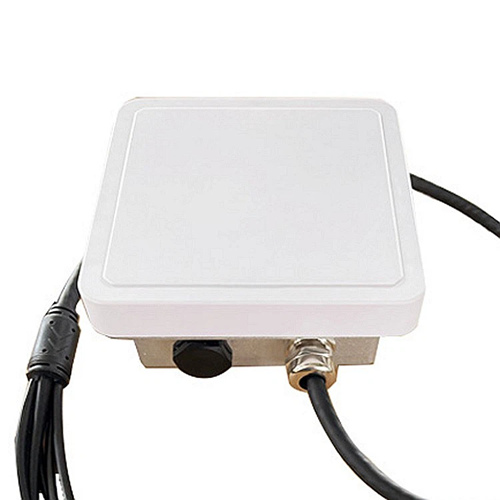

With its comprehensive capabilities, including RFID tamper-proof tags, RFID seals, LED tags, sensor tags, Bluetooth tags, and a full range of readers—fixed, handheld, and integrated RFID readers—Xminnov provides complete solutions for seamless RFID deployments. This guide highlights key best practices for the installation and deployment of RFID infrastructure, tailored to different types of RFID readers and tags, and how these systems interact in real-world applications.
Why Proper Installation of Integrated, Handheld, and Fixed RFID Readers Matters
Even high-performance RFID readers—whether fixed, handheld, or integrated—can fail to perform if installed incorrectly. Common issues such as poor read rates, signal interference, and network instability are often the result of installation mistakes, not hardware defects.
Key risks of improper installation include:
Reduced tag read accuracy
Signal blind spots
Cross-read interference
Network instability
Increased maintenance costs
Delayed ROI on RFID projects
A structured installation approach ensures that the full value of RFID automation is realized from day one, whether using fixed readers at warehouse portals, handheld readers for inventory management, or integrated readers for mobile and operational uses.
Step 1: Define Application Requirements Clearly
Before starting the installation, project teams must align on the operational environment and specific use case. Different RFID readers (fixed, handheld, and integrated) each serve unique roles depending on the workflow.
Critical parameters to confirm:
Reading distance requirements for tags
Tag types (UHF, NFC, etc.) and frequency
Throughput speed
Environmental conditions (metal, liquids, temperature)
Network architecture
Power availability
Data integration needs
Xminnov Advantage: With in-house R&D and system engineering expertise, Xminnov helps customers select and configure the right reader—whether fixed, handheld, or integrated—for their unique application, reducing trial-and-error during deployment.
Step 2: Conduct Professional Site Survey
A site survey is one of the most overlooked but essential steps. Industrial environments often contain factors—such as metal structures, moving equipment, and electromagnetic noise—that can impact RFID performance.
During the survey, evaluate:
Presence of metal surfaces and liquid interference
Mounting height options for fixed and integrated readers
Optimal paths for handheld readers during scanning
Network access points
Environmental protection needs
Safety and compliance requirements
Xminnov’s Engineering Team: For complex environments, Xminnov recommends simulation or pilot testing to ensure that antennas and readers are optimally placed for performance.
Step 3: Optimize Reader and Antenna Placement
Placement is crucial, as it directly affects read accuracy and coverage area. Whether you are using fixed, handheld, or integrated readers, ensuring optimal positioning will maximize system performance and minimize errors. The reader interface can display important data about the tag's status and reading accuracy in real-time, ensuring that users can quickly make adjustments if necessary.
Best practices for different applications:
Portal Applications (Fixed Readers)
Mount antennas at shoulder-to-head height for optimal coverage
Create overlapping read zones to ensure full coverage without excessive power settings
Use shielding where needed to reduce interference
Conveyor Applications (Fixed Readers)
Position antennas close to tag path to ensure consistent read range
Control conveyor belt speed and reader settings for smooth reading
Workstation Applications (Handheld and Integrated Readers)
Use near-field antennas for high-accuracy readings at workstations
Ensure operator safety clearance while using handheld devices
Xminnov Strength: Thanks to full hardware-software integration and comprehensive supply chain control, Xminnov helps recommend the right antenna type and reader placement strategies for each specific scenario, optimizing the reader interface for user-friendly operation.
Step 4: Ensure Proper Electrical and Network Setup
RFID readers, whether fixed, handheld, or integrated, require stable power and network connectivity for reliable operation.
Installation checklist:
Use industrial-grade power supplies
Ensure voltage stability
Implement proper grounding
Use shielded Ethernet cables where needed
Configure static IP for reliable network access
Test network latency to ensure data transmission reliability
Xminnov Support: Xminnov provides technical documentation to streamline IT integration and supports multiple communication interfaces for easy network setup.
Step 5: Configure Reader Parameters Correctly
Once hardware is installed, software configuration is crucial to fine-tuning performance. Whether using fixed, handheld, or integrated readers, proper configuration ensures optimal system performance. The reader interface will allow users to adjust parameters such as RF power level, session parameters, and tag filtering rules to ensure that only relevant data is captured.
Key settings to optimize:
RF power levels
Tag filtering rules for precision
Read cycle timing
Anti-collision settings for multi-tag scenarios
Incorrect parameter settings can lead to issues such as duplicate reads or missed tags.
Xminnov Support: Xminnov offers configuration guidance and SDK support to ensure readers perform optimally in diverse environments. The reader interface also allows for easy configuration and real-time data monitoring.
Step 6: Perform Pilot Testing and Validation
Before full rollout, conducting a pilot phase helps validate the system’s readiness. A controlled testing phase ensures performance under real-world conditions and helps fine-tune both hardware and software settings.
Validation tests should include:
Read accuracy during peak load conditions
Multi-tag collision handling
Environmental stress testing
Network stability verification
Integration with WMS/ERP
Long-duration reliability testing
Xminnov Advantage: Xminnov supports both prototype testing and mass production workflows, ensuring seamless transitions from pilot phase to full deployment. During the pilot phase, the reader interface will be used to check for optimal tag reading performance and identify any areas for improvement.
Step 7: Plan for Environmental Protection
Industrial environments expose RFID readers to extreme conditions such as dust, moisture, vibration, and temperature fluctuations.
Protection measures include:
IP-rated enclosures for fixed readers
Protective mounting brackets
Thermal management for high-temperature environments
Vibration damping to minimize reader damage
Xminnov Products: Designed to withstand demanding environments, Xminnov’s readers and tags are built for harsh industrial settings.
Step 8: Establish Ongoing Maintenance Procedures
RFID systems are low-maintenance, but regular upkeep ensures long-term performance.
Recommended maintenance practices:
Periodic read-rate audits
Firmware updates
Regular inspection of mounts, cables, and connectors
Network health monitoring
Xminnov Support: Xminnov provides long-term technical support, helping customers ensure that systems stay optimized over time, including regular updates to the reader interface.
Manufacturing Strength Behind the Guidance
Xminnov’s credibility stems from substantial infrastructure:
10,000 m² established factory
110,000 m² XMINNOV IoT Industrial Park
Integrated R&D and production capabilities
End-to-end customization for RFID solutions
This foundation enables Xminnov to offer not only hardware but also comprehensive deployment expertise for RFID readers Official Website: https://www.rfidtagworld.com/
Xiamen Innov Information Science & Technology Co. LTD
Xiamen Innov Information Science & Technology Co. LTD
+ +8613606915775
sales@rfidtagworld.com
Legal Disclaimer:
EIN Presswire provides this news content "as is" without warranty of any kind. We do not accept any responsibility or liability for the accuracy, content, images, videos, licenses, completeness, legality, or reliability of the information contained in this article. If you have any complaints or copyright issues related to this article, kindly contact the author above.
