

AndaSeat Easter Sale Highlights Xtreme Desk as Workstation Design Draws Renewed Attention in Hybrid Routines
2026 Easter Sale AndaSeat
Xtreme Desk Dark Set
Xtreme Desk Feature 0 Cable
AndaSeat Easter Sale Highlights Xtreme Desk as Workstation Design Draws Renewed Attention in Hybrid Routines
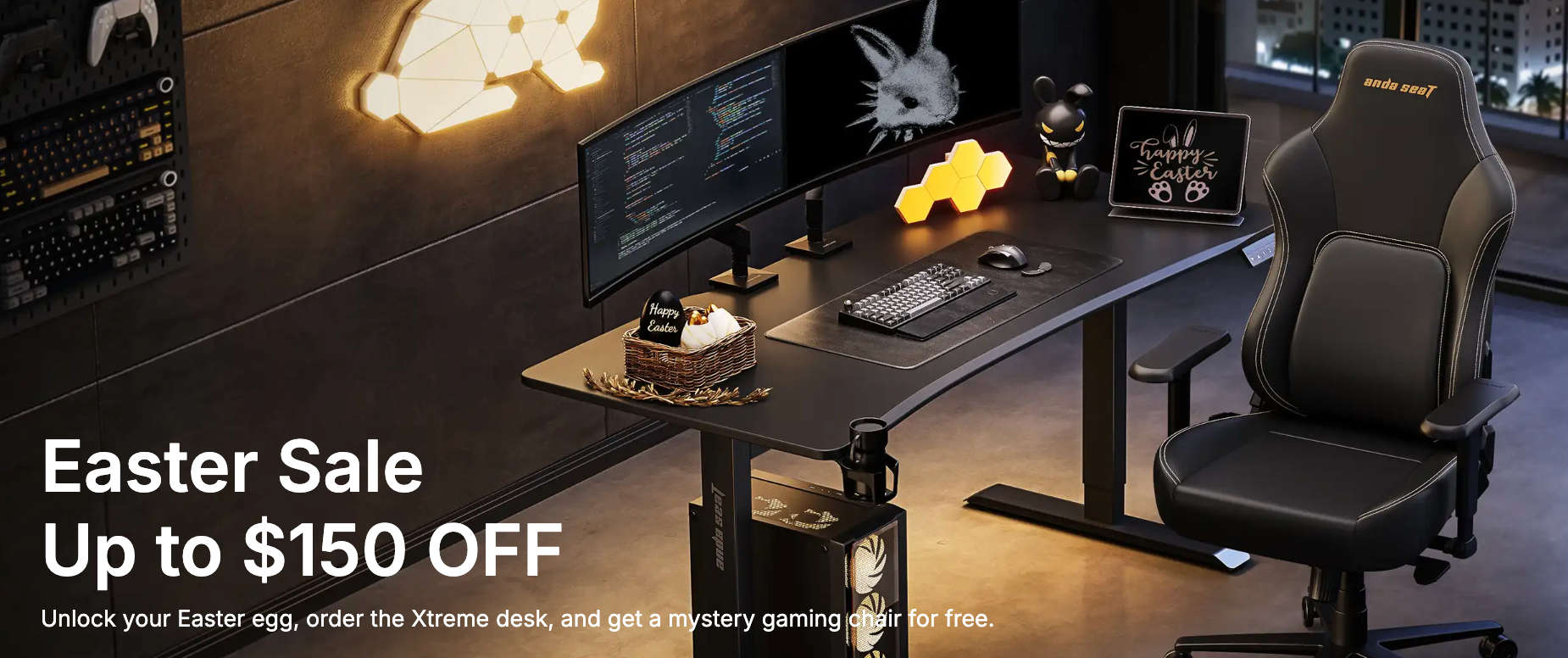
SPOKANE, WA, UNITED STATES, April 7, 2026 /EINPresswire.com/ -- AndaSeat has launched its Easter Sale campaign, running with seasonal price adjustments across selected products and featuring the Xtreme desk as a central focus. The campaign includes Easter-themed promotional messaging, with the company stating that customers who order the Xtreme desk during the campaign period will receive a mystery gaming chair as part of the event. While the seasonal offer provides the commercial context, the company’s product emphasis this Easter is centered on a broader question that continues to shape home workstation decisions: how desk design affects comfort, posture, movement, and long-duration screen use.That question has gained visibility as work, study, and entertainment increasingly overlap in the same physical setting. Public guidance from major health and workplace bodies has continued to draw attention to the effects of inactivity, sedentary behavior, and poorly configured computer workstations. The World Health Organization has published guidance on physical activity and sedentary behaviour, while OSHA’s workstation guidance states that a well-designed and appropriately adjusted desk should provide adequate clearance, allow proper placement of equipment, and help minimize awkward postures and exertions. CDC materials have also noted that prolonged sitting is associated with a range of negative health outcomes and can contribute to neck and back discomfort.
For many consumers, that discussion has shifted workstation buying decisions beyond monitor size or chair selection alone. The desk itself has become a more closely examined part of the setup. In practical terms, users are paying more attention to whether a desk can support neutral positioning, reduce clutter, fit multiple devices, and make it easier to vary posture throughout the day rather than locking the user into one static arrangement.
Why the Desk Has Become a Larger Part of the Conversation
In desk-based environments, many discomfort issues are not caused by one factor alone. They emerge from the interaction between chair height, monitor placement, keyboard reach, leg clearance, cable management, and how long a person stays in one position. OSHA’s workstation materials emphasize that desk dimensions and under-desk space are foundational to placing equipment properly and supporting workable posture. The agency also notes that there is no single correct arrangement for every person, which has made adjustability and setup flexibility more relevant in consumer purchasing.
That shift is especially visible in hybrid routines. A workstation may support focused office tasks in the morning, calls and meetings later in the day, and gaming or media use in the evening. In smaller homes, shared rooms, or mixed-use living areas, one desk often has to support all of those activities without becoming visually chaotic or physically restrictive. The desk is no longer just a surface; it is increasingly treated as the structural base of the entire setup.
AndaSeat said the Xtreme desk was designed around this change in use pattern. Rather than viewing the desk as a passive platform, the company developed it as an active part of workstation function, with attention to movement, layout, and the day-to-day realities of long screen sessions.
The Consumer Pain Point Behind Xtreme
The most common consumer frustrations in home workstation design are often straightforward. Some desks do not provide enough depth for comfortable monitor placement. Others create under-desk obstructions that limit legroom. In many cases, power cables and accessories accumulate around the desk and make the setup harder to maintain. Where the desk is fixed in height, users may end up adjusting everything else around it, including chair position, arm angle, and monitor distance, often with inconsistent results.
These are the kinds of routine problems that have helped bring adjustable desk design into broader public discussion. At the same time, the conversation has become more nuanced. NIOSH has cautioned that prolonged standing in one place also carries risk, including fatigue and low back pain, which makes the value proposition of a sit-stand desk less about standing all day and more about creating the ability to change posture, interrupt static time, and adapt the workstation across different tasks.
AndaSeat said this was part of the design rationale behind Xtreme. The desk was developed not simply to change height, but to support a more flexible workstation routine in which users can alternate posture, maintain cleaner organization, and configure the space for both productivity and leisure use.
How AndaSeat Frames the Xtreme Desk
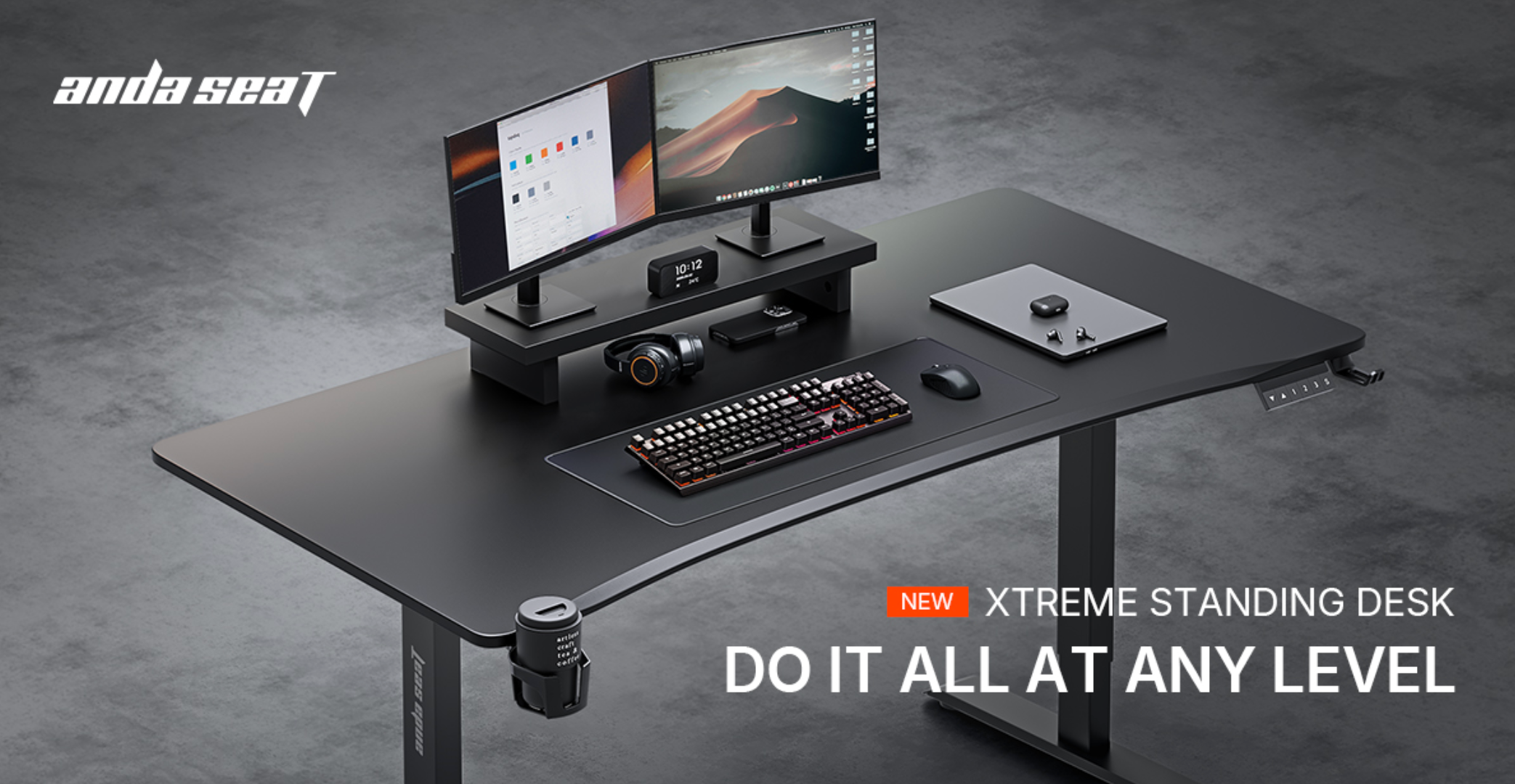
According to AndaSeat, the Xtreme desk was developed as an electric sit-stand desk intended for home workstations, gaming setups, and multi-purpose desk environments. The product is designed around several practical goals: giving users an adjustable work surface, preserving under-desk usability, reducing visual and physical clutter, and making daily transitions between tasks easier to manage.
One of the core product ideas behind Xtreme is that adjustability should be usable rather than complicated. OSHA’s own public guidance repeatedly frames workstation design in terms of setup conditions that can reduce awkward positioning and support better placement of equipment. In that context, the relevance of a motorized desk is not only that it moves, but that it can help users reconfigure the workstation with less friction as their activity changes during the day.
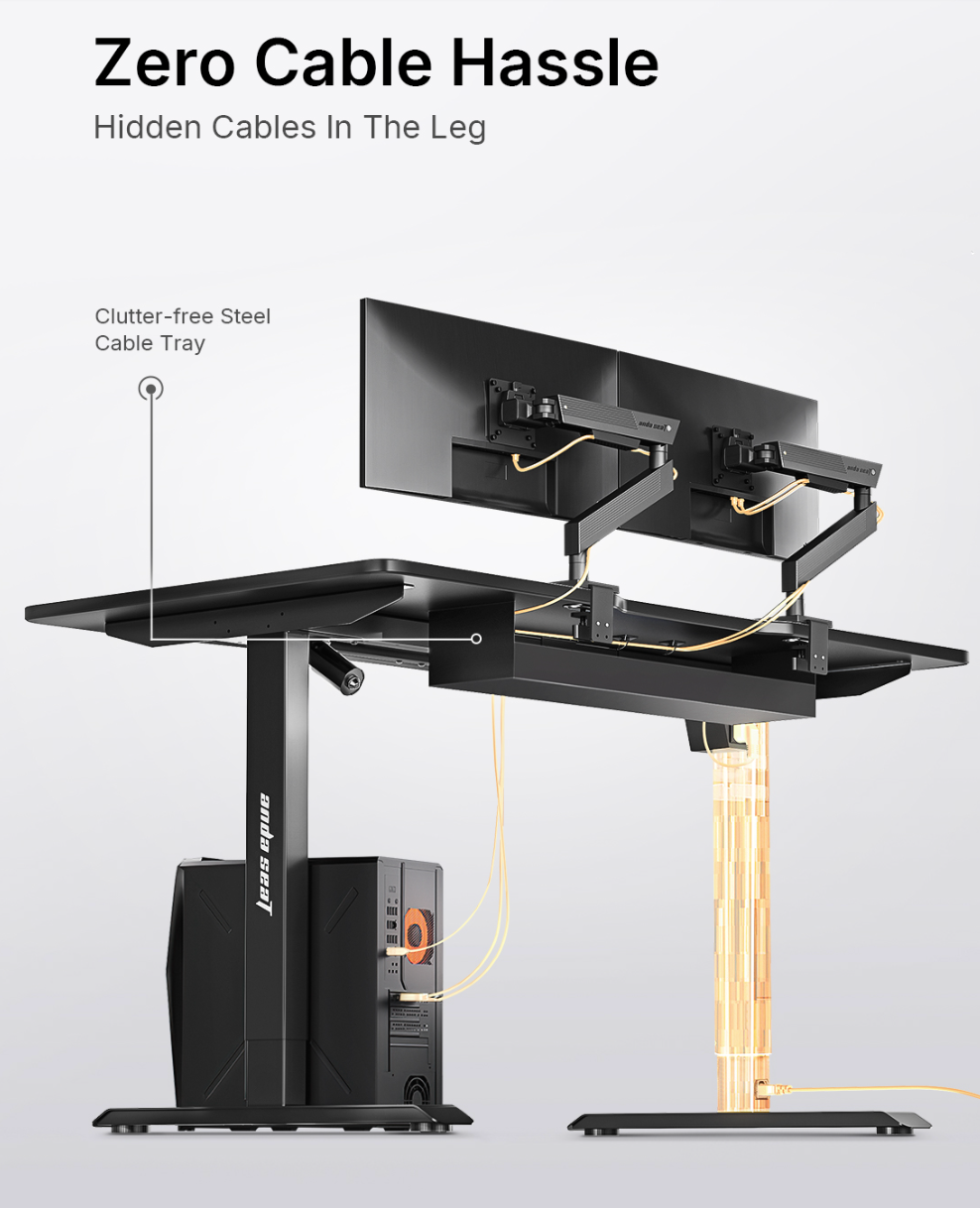
AndaSeat also places notable emphasis on structural stability and cable management in the Xtreme design. This reflects a consumer concern that has become increasingly visible in both home office and gaming setups: a desk may have adjustment features, but if it introduces wobble, exposed wiring, or poor equipment organization, the functional benefit can be undermined in everyday use.
Product Focus: Layout, Movement, and Clean Setup
The Xtreme desk is positioned by AndaSeat as a desk for users who want one surface to support multiple device types and multiple use modes. In product terms, that means the desk is framed not only around height change, but around the practical structure of a workstation.
AndaSeat states that the Xtreme includes an electric lift system, a steel frame structure, a digital control panel with preset memory, and built-in cable management solutions. The company also highlights anti-collision functionality, child lock capability, and a sedentary reminder feature. Together, these design choices suggest a product developed for consumers who are looking for a desk that is easier to live with over time, rather than one that relies on height adjustment alone as its defining characteristic.
This is important in editorial terms because media attention around desks has matured. Coverage is often less interested in whether a desk simply rises and lowers, and more interested in whether the design responds to persistent frustrations such as cable disorder, unstable surfaces, constrained leg space, or setups that become difficult to maintain once several devices are added.
Why Easter Is a Plausible Timing Hook
Although Easter campaigns are often treated primarily as retail events, they also arrive during a seasonal period when many households reassess home environments. For some consumers, that means spring cleaning and organization. For others, it means revisiting workstations that have gradually accumulated clutter or become less functional over time.
AndaSeat’s Easter framing around the Xtreme desk aligns with that seasonal reset logic. The campaign messaging uses a holiday theme, but the underlying product story is more practical: if consumers are already reconsidering how their rooms are organized, the desk becomes one of the more consequential parts of that conversation because it affects posture, device layout, and how easily a space can switch between work and leisure.
In that sense, the Easter Sale provides a timely commercial backdrop, while the broader news angle remains tied to workstation design and the consumer demand for more flexible desk environments.
A Desk Designed for More Than One Routine
What distinguishes the Xtreme story from a simple sales announcement is the way AndaSeat connects the desk to overlapping daily behaviors. A user may need the same workstation to support keyboard work, meetings, content consumption, gaming, and short movement breaks. The desk therefore becomes less of a fixed object and more of a system anchor for multiple routines.
AndaSeat said the Xtreme was designed with that overlap in mind. Its role in the company’s Easter campaign is not limited to a seasonal offer, but extends to a broader product position: a desk built for people who want cleaner organization, greater adjustability, and a setup that can accommodate change without demanding a full reset every time the workday shifts.
About the Easter Sale
AndaSeat’s Easter Sale features seasonal pricing across selected products, with the Xtreme desk serving as the main focus of this release. The campaign includes messaging around savings of up to $150 and a chair-bundling promotion tied to Xtreme desk orders. In this release, however, the company’s emphasis remains on the desk’s role in addressing current workstation concerns rather than on promotional language alone.
About AndaSeat
Founded in 2007, AndaSeat develops ergonomic furniture products for gaming, work, and home environments. Its product portfolio includes ergonomic chairs, desks, and related workspace products designed for home users, hybrid workers, and gaming setups.
Caroline Chen
AndaSeat
+ + 86 139 2232 2347
email us here
Visit us on social media:
LinkedIn
Instagram
Facebook
YouTube
TikTok
X
Legal Disclaimer:
EIN Presswire provides this news content "as is" without warranty of any kind. We do not accept any responsibility or liability for the accuracy, content, images, videos, licenses, completeness, legality, or reliability of the information contained in this article. If you have any complaints or copyright issues related to this article, kindly contact the author above.
